
When a Drug Dog Extends a Traffic Stop in Georgia
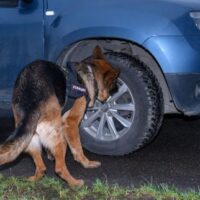
A traffic stop can change direction quickly when an officer calls for a drug dog. What began as a stop for speeding, lane use, or another traffic violation may turn into a narcotics investigation before the driver knows whether a citation is even being issued. The key question is often not simply whether police used a dog, but whether the dog sniff added time to the stop without a lawful reason to keep the driver detained.
Timing can become critical because a traffic stop has a limited purpose. Officers may address the violation, check a license and registration, run records checks, and handle related safety concerns. A drug investigation is different. When the original traffic work is finished, police generally need an independent basis to continue holding the driver for a canine sniff. Early legal guidance from an experienced Georgia drug crimes lawyer can help reconstruct the sequence of the stop and determine whether the detention lasted longer than the traffic investigation allowed.
A Drug Dog Cannot Simply Add Time to a Completed Traffic Stop
The Fourth Amendment limits how long police may hold someone during a traffic stop. In Rodriguez v. United States, the U.S. Supreme Court held that officers may not prolong an otherwise completed traffic stop for a drug-dog sniff unless they have reasonable suspicion supporting the additional detention.
The traffic violation defines the basic mission of the stop. Writing a citation, checking a driver’s license, confirming registration, and handling ordinary safety-related tasks can take time. A canine sniff aimed at detecting drugs does not become part of that traffic mission simply because it occurs on the roadside.
Even a short extension can matter. Rodriguez rejected the idea that police automatically receive a few extra minutes after completing the traffic work. The focus is on whether the dog sniff added time that was not otherwise justified.
The Timing of the Sniff Can Change the Analysis
A dog sniff may occur while legitimate traffic-related tasks are still underway. That creates a very different issue from an officer finishing the citation, returning the documents, and then making the driver wait for a canine unit to arrive.
Recent Georgia decisions show how closely courts examine that timing. In Avant v. State, decided in 2025, the Georgia Court of Appeals upheld a stop where questioning and the free-air sniff occurred while officers were still running computer checks and completing the citation. The court found that the sniff did not add time to the traffic stop.
State v. Dean, also decided in 2025, reached a similar conclusion where the canine sniff occurred while another officer was still working on the citation. The important point was not that a dog was used, but that the deployment did not prolong the traffic work already in progress.
Body-camera footage, dispatch records, citation timestamps, and canine-call records can make the sequence much clearer than a written report prepared afterward.
Reasonable Suspicion Can Support Additional Detention
Police may continue a stop beyond its original traffic purpose when new facts create reasonable suspicion of separate criminal activity. That suspicion has to come from specific circumstances rather than a generalized hunch that something feels wrong.
Officers may point to inconsistent travel explanations, observations made before the stop, unusual conduct, information obtained through records checks, or other facts developed during the encounter. One fact that appears innocent by itself may be considered together with other observations.
Nervousness creates a more difficult issue because traffic stops are stressful for many people. An air freshener, unusual travel plans, or reluctance to answer unrelated questions may also be interpreted differently depending on the surrounding circumstances. The question becomes whether the facts known to the officer justified keeping the vehicle and its occupants detained after the traffic work otherwise should have ended.
Waiting for the Dog Is Different From Using One That Is Already There
The length of the detention often changes when a canine unit has to travel to the scene. An officer who is still lawfully processing a citation may be able to use a drug dog without adding time if the dog is already present or arrives while the traffic investigation remains underway.
A different problem arises when the traffic work is effectively complete and everyone remains roadside only because another officer is still several minutes away with a dog. Without reasonable suspicion supporting that additional detention, the wait itself may violate the Fourth Amendment.
Reconstructing that interval can be particularly important. When was the warning or citation completed? When was the canine requested? When did the dog arrive? Were officers still performing legitimate traffic tasks, or had the stop shifted entirely into waiting for a narcotics investigation? Those timestamps can reveal where the purpose of the detention changed.
A Dog Alert Can Lead to a Search, but the Alert Can Still Be Examined
Once a trained drug-detection dog gives a reliable alert, police may rely on that alert as probable cause to search a vehicle under the circumstances recognized by the U.S. Supreme Court in Florida v. Harris. The Court rejected a rigid checklist for proving canine reliability and instead used a totality-of-the-circumstances approach.
Training and certification records can support the reliability of an alert, but the analysis does not end with an officer saying that the dog alerted. The circumstances of the deployment, the dog’s training, the handler’s interpretation, and the particular alert can still be questioned.
Video may be especially useful when there is a dispute about what the dog actually did. A handler may describe a final response differently from what the recording appears to show, or the dog may show interest at several places before the officer identifies a particular alert. Those details can matter when the search rests almost entirely on the canine response.
The Search After an Alert Has Its Own Questions
A canine alert may supply probable cause for a vehicle search, but the legality of the search can still depend on what happened before the alert. A valid alert does not retroactively cure an unlawful detention that kept the driver roadside long enough for the dog to arrive.
That distinction can become important in a suppression challenge. A court may have to consider whether the traffic stop was still underway, whether reasonable suspicion justified any extension, and whether the canine deployment itself was supported by reliable evidence.
Georgia provides a procedure for challenging unlawfully seized physical evidence through O.C.G.A. § 17-5-30. A motion to suppress can place the legality of the detention and resulting vehicle search before the trial court.
The Timeline Can Become the Center of the Challenge
Traffic-stop cases often look very different once the encounter is reduced to minutes and seconds. A report may say that a canine sniff occurred “during the stop,” while video shows that the citation had already been completed and officers were waiting for the dog. The reverse can also be true, with the recording showing that traffic-related tasks were still underway when the dog alerted.
A few minutes can separate a canine sniff that occurs alongside legitimate traffic work from one that prolongs the detention without reasonable suspicion. Dispatch audio, body-camera footage, computer timestamps, citation records, and canine-unit logs can help establish what was happening during that interval.
When the legality of the search turns on that sequence, a careful review with a Georgia drug crimes lawyer can identify the point where the traffic investigation ended and determine whether police had a lawful basis to continue the detention.
Contact The Spizman Firm Today
The Spizman Firm represents clients throughout the Atlanta metropolitan area and the State of Georgia facing drug charges arising from traffic stops and vehicle searches. A drug-dog case can turn on the timing of the deployment, the facts officers relied on to extend the stop, and whether the canine alert supported the resulting search.
If police found drugs after extending a traffic stop for a canine sniff, speak with a Georgia drug crimes lawyer at The Spizman Firm today to discuss the stop, the search, and the evidence prosecutors intend to use.
Source:
Rodriguez v. United States, 575 U.S. 348 (2015) — Duration of Traffic Stops and Drug-Dog Sniffs
https://supreme.justia.com/cases/federal/us/575/348/
Florida v. Harris, 568 U.S. 237 (2013) — Reliability of Drug-Detection Dog Alerts and Probable Cause
https://supreme.justia.com/cases/federal/us/568/237/
Avant v. State, 376 Ga. App. 334 (2025) — Canine Sniff Conducted While Traffic Tasks Were Still Underway
https://law.justia.com/cases/georgia/court-of-appeals/2025/a25a0580.html
State v. Dean, Georgia Court of Appeals, A25A0160 (2025) — Timing of Free-Air Canine Sniff During Citation Processing
https://law.justia.com/cases/georgia/court-of-appeals/2025/a25a0160.html
O.C.G.A. § 17-5-30 — Motion to Suppress Evidence Illegally Seized
https://law.justia.com/codes/georgia/title-17/chapter-5/article-2/section-17-5-30/