

When Can Georgia Police “Escalate” an Encounter?
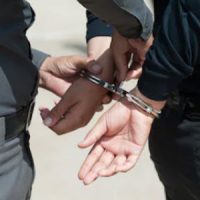
Not all police encounters with a member of the public are treated equally under the law. There are actually three “tiers” of police-citizen encounters. Each tier affords the citizen with a different degree of legal protection under the Fourth Amendment.
A first-tier encounter refers to any communication where there is no coercion or detention. Such encounters are not subject to the Fourth Amendment. The second tier involves a brief seizure by the police, which must be supported by some “reasonable suspicion” of criminal activity. The third tier is when the police actually arrest an individual, in which case the officer must meet the higher legal standard of “probable cause.”
Georgia Judge Suppresses Results of Illegal Frisk
A police officer may not escalate an encounter without meeting the necessary legal standard. The Georgia Court of Appeals recently reaffirmed this principle in a case, State v. Mrozowski, where a trial judge suppressed evidence gathered by a police officer who improperly “escalated the encounter to a second- or third-tier encounter without probable cause.”
Here is what happened. A local sheriff’s office received an anonymous tip that two white males were “acting suspicious” and possibly doing drugs near a public pavilion. The tipster gave a description of one of the male’s clothing and suggested he had outstanding warrants.
An officer was dispatched. Arriving at the pavilion, he saw two men sitting on the ground, one of whom was the defendant in this case. The officer asked the men for identification. The defendant then tried to walk away, but he was blocked by another officer. The defendant then tried to walk away in a different direction. The officer grabbed the defendant’s arm. The defendant resisted. The officer then proceeded to frisk the defendant and found what appeared to be drug paraphernalia. The officers then arrested the defendant, which he physically resisted.
In upholding the trial judge’s decision to suppress the evidence gathered during and after the frisk, the Court of Appeals explained that officers lacked “reasonable suspicion” to elevate what started as a first-tier encounter to a second-tier encounter. The anonymous tip had not been corroborated by any evidence connecting the defendant to any illegal activity. Nor did the officers see the defendant “[e]ngage in suspicious behavior or consumption of drugs.” The arresting officer suggested the defendant might have been intoxicated because he “was unsteady” and slurred his words. But that alone would not justify a criminal charge of public drunkenness.
As such, the defendant was well within his rights to walk away from what was legally a first-tier encounter. The police acted illegally in trying to arrest the defendant and using his resistance as justification after the fact.
Contact The Spizman Firm Trial Lawyers Today
Anytime you are approached by the police on the street, remember that you do not have to answer any questions. And if you are unlawfully arrested, you also have the right to speak with a qualified Atlanta criminal defense attorney. Contact The Spizman Firm Trial Lawyers today to schedule a free consultation. We serve clients throughout Georgia including Atlanta, Dunwoody, Alpharetta, Cobb County, Fulton County, Gwinnett County, Johns Creek and Sandy Springs.
Source:
scholar.google.com/scholar_case?case=16754440105779910813