
Self-Checkout Technology Is Creating a New Generation of Shoplifting Cases
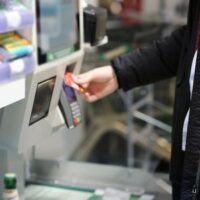
Self-checkout turns the customer into the person scanning merchandise, entering produce codes, responding to machine prompts, and deciding when the transaction is complete. A missed barcode or incorrect produce selection can leave an item unpaid or charge less than the shelf price. Stores are also using cameras, weight sensors, transaction data, and other analytics to identify irregularities while customers move through the checkout process.
A self-checkout record may show that merchandise left the store without the correct payment, while the reason for the discrepancy remains disputed. A rushed scan, an unreadable barcode, a wrong produce code, or a machine prompt cleared by an attendant can create a very different factual history from deliberately avoiding payment. When a checkout mistake leads to a criminal accusation, working with an experienced Atlanta theft lawyer can help challenge a claim that an irregular transaction was intentional shoplifting.
What Georgia Shoplifting Law Requires at Self-Checkout
O.C.G.A. § 16-8-14 covers several forms of theft by shoplifting, including concealing or taking merchandise and wrongfully causing the amount paid to be less than the merchant’s stated price. The statute also requires an intent to appropriate merchandise without paying for it or to deprive the owner of possession or value. A checkout discrepancy and the intent attributed to it can therefore become separate parts of the accusation.
Self-checkout creates a detailed transaction history that may show exactly when an item was scanned, what price appeared, which produce code was entered, whether the terminal issued a warning, and when payment was completed. Video can add the customer’s movements at the machine. Reading those records together can provide a fuller account than simply counting the items that were unpaid when the transaction ended.
A Missed Scan May Have More Than One Explanation
Barcodes do not always scan cleanly. Packaging can be wrinkled, labels can be damaged or poorly positioned, merchandise may not be recognized by the terminal, and a customer may believe an item registered after hearing another nearby scan. Retail-loss research has identified barcode failures and products that are not properly recognized by self-checkout systems as recurring operational problems.
The transaction record may show whether the shopper attempted to scan the item, paused at the terminal, tried more than once, or asked an attendant for help. Surveillance may capture an item passing over the scanner even when the register never recorded it. Those details can change the meaning of an unpaid item discovered at the end of the transaction.
Repeated missed scans present a different factual picture from a single irregularity, particularly when video shows merchandise being moved around the scanner without any attempt to register it. The prosecution may rely on the pattern, while the complete transaction history can show interruptions, machine problems, attendant assistance, or other events that occurred along the way.
Produce Codes Can Create Their Own Disputes
Fresh produce often requires a customer to search for an item on the screen or enter a price lookup code rather than scan a conventional barcode. Similar varieties may appear next to one another, and the customer may choose from several descriptions that look nearly identical on the terminal.
A lower-priced produce code can result in less money being charged for the item actually placed on the scale. Under the shoplifting statute, intentionally causing the amount paid to be less than the stated price can support a charge. The checkout record may preserve the code entered, the amount charged, and the time of the selection.
Video and terminal prompts can provide additional context. A shopper who spends time searching through produce options before selecting the wrong variety presents a different sequence from someone repeatedly entering a cheaper code for more expensive merchandise. Previous transactions may also become part of an investigation if loss-prevention personnel believe the same substitution occurred before.
Wrong Barcodes Can Look Deliberate Even When the Transaction Is Messy
Retailers may investigate a transaction when the barcode scanned at the register does not correspond with the merchandise visible on camera. A cheaper barcode could have been placed over another label, an item might be scanned using packaging from a different product, or merchandise may have more than one barcode visible.
Self-checkout technology can compare what a camera sees with what the register says was scanned. Newer systems may flag a mismatch between the apparent product and the barcode or produce code entered at the terminal. A machine-generated alert can bring an attendant or loss-prevention employee into the transaction before the customer leaves the checkout area.
Store video can show who handled the barcode, whether the package was already altered when it reached the scanner, and what happened after the machine generated an alert. An attendant may override a warning, rescan merchandise, remove an item from the transaction, or tell the customer to continue. Those interactions can become particularly useful when a later report makes the checkout sequence appear more straightforward than it actually was.
Surveillance Analytics Can Turn a Checkout Alert Into an Investigation
Self-checkout cameras increasingly do more than record video for later review. Retail systems can analyze merchandise moving across the scanner, compare visual information with transaction data, and generate alerts when an item appears to pass through checkout without a corresponding scan. Research and commercial development in this area increasingly focus on identifying non-scans, barcode mismatches, and produce-code discrepancies as they occur.
An alert may cause an attendant to intervene immediately or prompt loss-prevention personnel to review the transaction after it ends. The timing can show whether the store resolved the discrepancy at the machine or allowed the customer to leave before treating the event as suspected theft.
Analytics can also direct attention toward a particular few seconds of video. Reviewing the full transaction may show earlier scan attempts, a terminal freeze, attendant involvement, or merchandise that was ultimately paid for under a later entry. The complete sequence can keep a machine-generated exception from becoming the entire story of what happened at checkout.
Intent May Be the Central Dispute
A self-checkout system can record an unpaid item or a lower-priced code with precision. Intent comes from the shopper’s conduct surrounding that transaction. Camera footage, register data, prompts displayed by the terminal, attendant interactions, and the shopper’s response after discovering an error can all provide context.
A person who realizes an item failed to scan and deliberately leaves it in the bag presents a different sequence from someone who repeatedly passes an item over the scanner, receives no clear error message, and completes payment believing the transaction is finished. Similar distinctions can arise when a shopper selects the wrong produce variety or scans a barcode already attached to the package.
When a store treats a self-checkout discrepancy as deliberate theft, guidance from a knowledgeable Atlanta theft lawyer can help challenge the inference of criminal intent drawn from the transaction.
Contact The Spizman Firm Today
If a missed scan, incorrect produce code, barcode problem, or self-checkout alert led to a shoplifting accusation, the transaction history and surveillance may show more than the final receipt or loss-prevention report.
The Spizman Firm represents clients facing theft and shoplifting charges throughout the Atlanta metropolitan area and the State of Georgia. Contact us to speak with one of our trusted Atlanta theft lawyers today about challenging a shoplifting allegation arising from a disputed self-checkout transaction.
Sources:
Georgia Code § 16-8-14 — Theft by Shoplifting
law.justia.com/codes/georgia/title-16/chapter-8/article-1/section-16-8-14/
ECR Retail Loss — Self Checkout: Barcode Does Not Scan — Latest Insights
ecrloss.com/self-checkout-barcode-does-not-scan-latest-insig/
IET Computer Vision — Centre-Loss: A Preferred Class Verification Approach Over Sample-to-Sample in Self-Checkout Products Datasets
ietresearch.onlinelibrary.wiley.com/doi/10.1049/cvi2.12302
U.S. Patent Application — Image-Based Self-Checkout Shrink Reduction
patents.justia.com/patent/20250005550